
Flat Roof Drainage: Which System Is Right for Your Building?
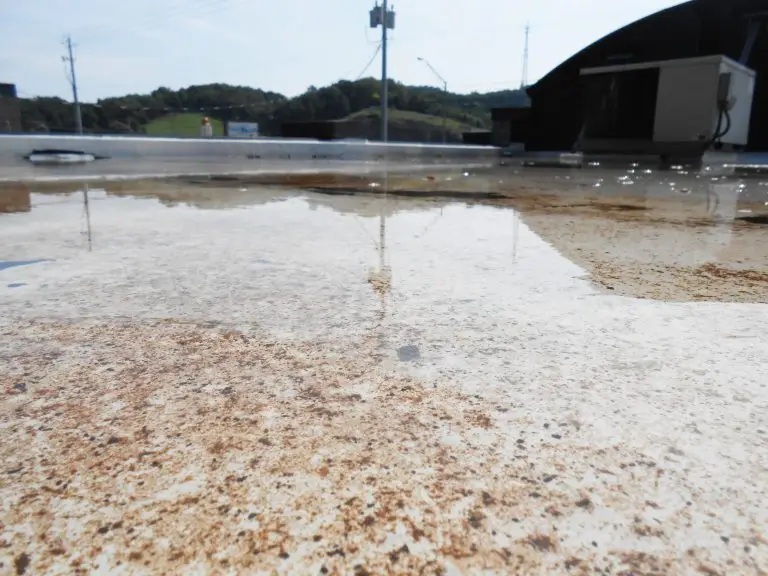
Every flat roof has one fundamental challenge that sloped roofs don’t: water doesn’t leave on its own. Without a built-in drainage system, flat roofs accumulate standing water, debris, and the kind of sustained moisture exposure that leads to leaks, membrane damage, compromised caulking and seals, and, in serious cases, structural failure. In winter, that standing water becomes ice, adding weight and stress to the roof structure.
The good news is that there are proven drainage solutions designed specifically for flat and low-slope commercial roofs. The key is choosing the right one for your building. Here’s a breakdown of the three most common systems.
Interior Drains
Interior drains function similarly to a floor drain, positioned at low points across the roof surface where water naturally collects, they channel water into a concealed pipe system that routes it down through the building and out to a downspout at the perimeter.
Advantages: Because the pipe system runs inside the building envelope, it’s protected from freezing temperatures and physical damage. The drains themselves can be positioned anywhere water tends to pool, making the system highly customizable. They also keep drainage infrastructure invisible, which benefits the appearance of the building.
Disadvantages: Interior drain systems are the most expensive of the three options. They also require strainers on every drain opening to prevent debris from entering the pipes, and those strainers need regular inspection and cleaning. When something does go wrong, repairs typically require a professional, accessing buried pipe systems isn’t a maintenance task most facilities teams can handle in-house.
Gutters
Gutters are the most familiar and most widely used drainage solution for commercial flat roofs. Mounted at the roof’s edge, they catch water as it flows off the surface and direct it through downspouts away from the building’s foundation, siding, and windows.
Advantages: Gutters are the most cost-effective option and straightforward to install. For buildings where budget is a primary constraint, they offer reliable drainage at a manageable price point.
Disadvantages: Gutters require consistent maintenance. Debris accumulates quickly, and a clogged gutter doesn’t just fail to drain, it overflows, sending water down the side of the building and potentially causing the foundation and siding damage they were installed to prevent. Gutters are also vulnerable to damage from severe weather, ice loads, and heavy debris impact.
Scuppers
Scuppers are large openings cut into the parapet wall or roof edge that allow water to drain directly off the roof surface and away from the building. Downspouts are sometimes installed below the scupper openings to control where that water goes at ground level.
Advantages: Scuppers are cost-effective, low-maintenance, and highly effective when properly sized and positioned. Because the openings are large, they rarely clog, even in heavy rain or significant debris conditions. Well-designed scuppers can also be an intentional architectural element that enhances the building’s exterior appearance.
Disadvantages: Scuppers are most effective on roofs with at least some pitch to guide water toward the edges. On a truly flat surface with no slope at all, water may not reach the scuppers efficiently. Any downspouts paired with scuppers still require periodic clearing, and scupper performance in extreme rainfall or rapid snowmelt events can be limited if the openings aren’t sized generously enough.
Which System Makes Sense for Your Building?
The right drainage solution depends on your building’s configuration, your climate, your maintenance capacity, and your budget. All three systems are vulnerable to debris clogging to varying degrees, scuppers without downspouts are the most forgiving in that regard. Interior drains offer the most protection for the building structure but come at a higher cost and require professional maintenance. Gutters are the most accessible option but demand consistent upkeep to perform reliably.
LaFerney Commercial Roofing installs and maintains all three systems across the Southeast. If you’re not sure which solution fits your building, our team can walk you through the options and help you make the right call.
Call 800-633-3119 or contact us online to talk through your flat roof drainage needs.