How Much Heat Is Your Commercial Roof Absorbing, And What Is It Costing You?
You’ve probably noticed it walking across a blacktop parking lot on a summer afternoon, the heat radiating up from a dark surface can make a 90-degree day feel significantly hotter. Step onto grass and the difference is immediate. The same principle applies directly to your commercial roof, and the financial implications are worth understanding.
The Numbers Are Striking
On a sunny 90-degree day, different roof surfaces reach dramatically different temperatures:
| Roof Surface | Approximate Temperature |
|---|---|
| Black roof | 140–190°F |
| Unpainted metal | 138–145°F |
| Gravel | 125–140°F |
| White roof | 102–120°F |
| Painted metal (cool paint) | 105–115°F — up to 42% cooler than unpainted |
| Aluminum reflective coating | Up to 68°F cooler than a black roof |
| Vegetative roof | ~90°F |
A dark roof can reach nearly 190°F while a reflective or vegetative alternative stays near ambient air temperature. That gap doesn’t stay on the roof surface, it moves into your building.
What a Hot Roof Does to Your Building
Heat absorbed by your roof radiates downward into your interior, putting direct pressure on your HVAC system to compensate. In older buildings with lower insulation ratings, this effect is particularly pronounced. Modern insulation systems, R20 and above, do a significantly better job of limiting heat transfer than materials from even a decade ago.
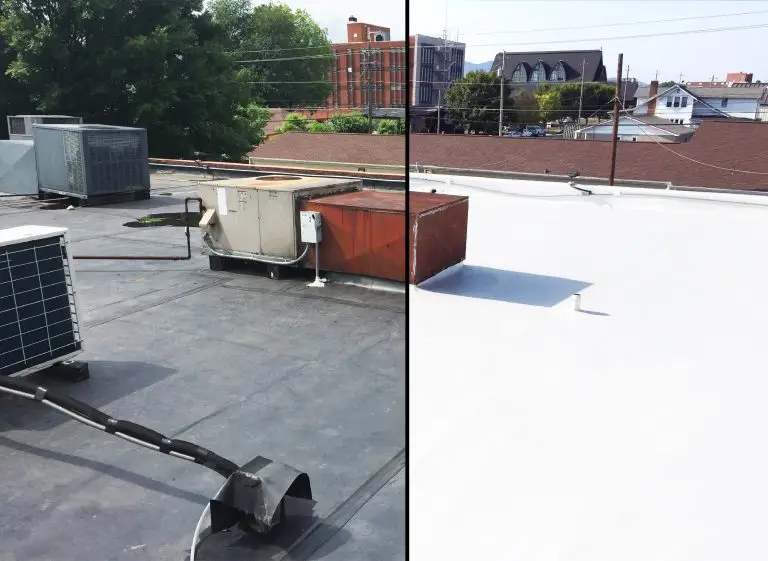
Pair upgraded insulation with a reflective white or silver coating and the impact compounds: reduced heat radiation means your cooling system doesn’t have to work as hard, which translates directly to lower energy bills and reduced strain on mechanical systems. For a large commercial facility running air conditioning through a long Southeast summer, that adds up quickly.
What You Can Do About It
If you’re approaching a re-roofing project or new construction, roof surface and coating selection should be part of the conversation from the start. But you don’t necessarily need a full replacement to improve performance, reflective coatings can often be applied to an existing roof system, and coating technology continues to advance. Recent research has produced coatings capable of keeping roof surfaces cooler than the surrounding ambient air temperature, a development that was considered impractical not long ago.
The right solution depends on your current roof system, your building’s energy profile, and your long-term goals for the facility. LaFerney’s team can assess your specific situation and walk you through the options that make sense, including what’s achievable without a full replacement.
Call 800-633-3119 or contact us online for a free estimate and consultation.