Winter Weather and Your Commercial Roof: What You Need to Know
Winter brings a distinct set of threats to commercial roofing systems, and because most commercial buildings have flat or low-slope roofs, the risks are different from what a typical homeowner faces. Understanding what to watch for, and getting ahead of it before temperatures drop, is the best way to protect your facility and avoid costly emergency repairs.
Here are the four biggest winter threats to commercial roofs:
Wind Damage
Flat commercial roofs are designed with a slight pitch to move water toward drains, but wind doesn’t care about drainage design. Strong winds can force moisture underneath roofing membranes, whether that’s felt, bitumen, or EPDM, compromising the seal and allowing water infiltration. Before winter arrives, have your roof inspected for loose seams, standing water, and deteriorating flashing or metal fasteners. It doesn’t take a major storm to cause significant damage, and a compromised roof puts your building, your occupants, and your operations at risk.
Snow Buildup
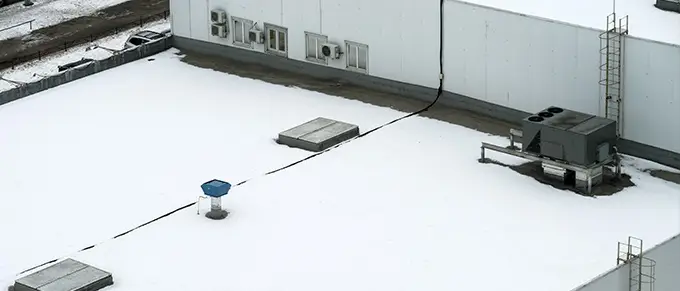
Commercial flat roofs are essentially collection surfaces for snow. Every commercial structure has a maximum load capacity, and heavy snowfall, especially drifting can push your roof well past safe limits. The structural stress of excess snow load is one of the more serious risks of the season, and one that can escalate quickly after a significant storm. A proactive maintenance plan that includes snow monitoring and removal protocols is essential for any commercial property in a region with meaningful winter precipitation.
Ice Dams
Ice dams are most common on sloped roofs, but they’re worth understanding for any facility with varied roof pitches or overhangs. When heat escaping from the building warms the upper portion of the roof, snow melts and runs toward the colder eaves, where it refreezes. Over several freeze-thaw cycles, this buildup forms a dam that traps water against the roof surface. That standing water eventually works its way under roofing materials and into the building. The conditions that create ice dams, sustained temperatures in the low 20s°F with snow accumulation, are common across much of the Southeast in a hard winter.
Condensation
Condensation is a less visible threat, but it causes real damage over time. When warm interior air meets a cold roof surface, moisture forms, and if your building lacks adequate ventilation, that moisture has nowhere to go. The result is accelerated deterioration of roofing materials, damage to the deck structure beneath, and conditions that accelerate ice dam formation. Poor ventilation can cut a roof’s effective lifespan in half. Regular inspections and working with a qualified commercial roofing contractor to ensure proper ventilation systems are in place is the most effective way to manage this risk.
Winter preparation starts in the fall. If you haven’t scheduled a pre-season roof inspection, now is the time. LaFerney’s team can assess your current condition, identify vulnerabilities before the first freeze, and help you build a maintenance plan that keeps your roof performing all winter long.
Call 800-633-3119 to schedule your inspection.